

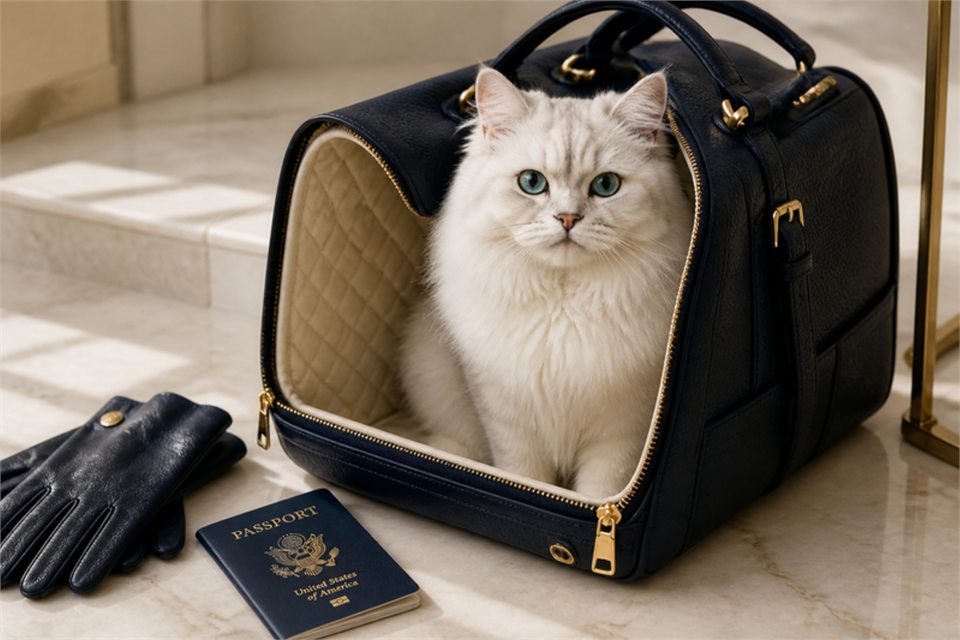
A comfortable carrier lets the animal stand, turn around and lie down; has a floor that does not sag or slide; lets air through on at least three sides; opens from the top as well as the front; weighs little enough to be carried level; and has been a familiar bed at home for days before it becomes a vehicle.
1. Room to stand, turn and lie
Measure the animal standing, from the floor to the top of the head or ears, and from the nose to the base of the tail. The carrier's interior should allow a few centimetres above the head and enough length to lie stretched. Too small is cruel; too large lets a small animal slide about in a car or a cabin. For air travel, the airline's own dimensions decide, and they vary; check them before any purchase.
2. A floor that stays put
A soft base that sags in the middle makes an animal brace with every step you take. Look for a rigid or semi-rigid floor, a washable liner that does not slip, and an absorbent pad beneath it for long journeys.
3. Air on three sides
Mesh or ventilated panels on at least three sides, and more in a hot climate. A carrier that looks beautiful from the outside and closes like a handbag is a warm box. In the Gulf in summer, the carrier stays in the shade and the air conditioning, and never in a parked car for any length of time.
4. Two ways in
A top opening lets you lift a reluctant cat or a small dog in and out without a struggle through a narrow door, and lets a vet examine without removing the animal. A front opening is for the animal to walk in by choice. Both, with closures that cannot be nosed open.
5. Light enough to carry level
A carrier is carried for longer than anyone plans. Weigh it empty; add the animal; and ask whether you can hold it level, by the handle and by the strap, through an airport. A carrier that tilts makes the animal slide to one end and stay tense.
6. Days of practice first
Leave the carrier open at home with a familiar blanket inside for a week before the first journey. Feed near it, then in it. Close the door for a minute, then five, then a short drive. By the day of travel it is a bed that moves, not a trap that appears. For a cat, this step is everything.
How the atelier builds its carriers
Atelier Pelisse starts with the six checks and only then with the leather. Its carriers are designed with a stable floor, ventilation before ornament, a top and a front entry, and a weight the hand can hold level. They are shown as editorial artwork until the first pieces have travelled with the animals who test for us, and the airline rules that apply to a cabin carrier are stated plainly with each piece.
Before you travel
Rules for moving a dog or cat between the United Kingdom and the United Arab Emirates change and depend on the route, the airline and the animal's papers. Confirm them with your airline and your veterinary surgeon before booking, and never sedate an animal for travel unless your vet has told you to.
Sources: general guidance from animal-welfare and veterinary bodies on carrier size, ventilation and acclimatisation; published airline cabin-carrier rules, which vary by carrier and must be checked for each journey; the Maison's atelier notes. This article is educational and is not veterinary advice.