

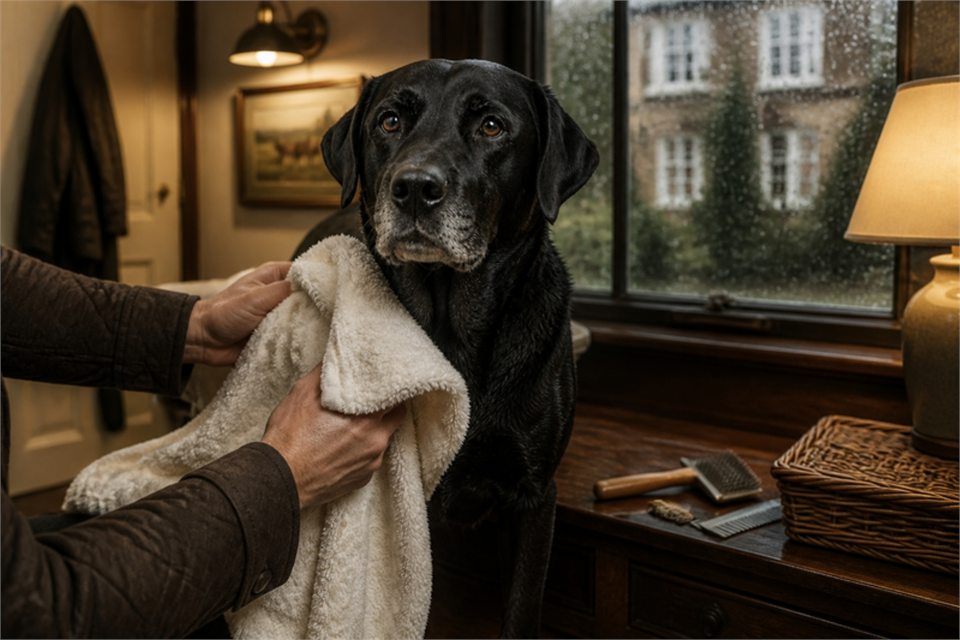
In London the enemy is damp: a wet coat left to dry on its own, mud between the pads, and a radiator that bakes the skin after. In Dubai the enemy is dryness: air conditioning that pulls moisture from skin and coat, then sun, sand and salt outside. The answer in both cities is the same three habits, done in a different order: dry well, brush often, bathe rarely.
London: dry the coat properly
A coat that stays damp against the skin for hours is uncomfortable and smells. After a wet walk, towel from the head back, pressing rather than rubbing, and pay attention to the chest, the belly and between the back legs where water collects. Dry between the pads with a corner of the towel. If a dryer is used, keep it on cool or warm, never hot, moving, and stop the moment the animal turns away. A long or curly coat is brushed once it is dry, never while wet, when the hair is at its most fragile and mats tighten.
Mud is best left to dry and brushed out, or lifted from paws and legs with a waterless cleansing mousse and a towel. A full bath after every muddy walk strips the oils that keep a coat weatherproof, which is why the next walk leaves it wetter still.
Dubai: give the coat back what the air takes
Indoors, air conditioning dries the skin, and a dry skin flakes and itches. Outdoors, the sun bleaches a dark coat and heats the skin beneath, sand works into the pads, and sea water leaves salt behind. Brush daily, lightly, to distribute the coat's own oils; a few minutes with a soft brush does more than any product. Rinse salt and sand from the legs and belly with plain water after the beach, then towel dry; a mousse does the same job on the days a hose is not to hand. Walk early or late, keep to the shade, and remember that a pavement too hot for the back of your hand is too hot for a paw.
A light conditioning shampoo, used sparingly, helps a dry coat in the Gulf more than frequent washing ever will. The Maison's Bain de Lait is made for this: a mild, low-fragrance wash with fermented oat milk, pH-balanced, for every four to eight weeks rather than every week.
Cats in either city
A cat manages its own coat and asks only for help with what it cannot reach: a daily brush for a long coat, a weekly one for a short coat, and attention in a dry climate to the base of the tail and the hindquarters where mats form. A cat should not be bathed unless your vet says otherwise, and never with anything it cannot safely lick. Everything the Maison makes passes that test; nothing with essential oils or alcohol goes near a cat here.
The Maison's week
- Every day: a light brush, following the coat; paws checked and wiped.
- After rain, beach or marina: towel dry, then Écume de Soie on paws, legs and belly, towelled away.
- Once a week at most: Eau de Pelisse, smoothed on by hand, for scent rather than cleansing.
- Every four to eight weeks: Bain de Lait, rinsed thoroughly, dried properly.
- Between cities: a brush and a mousse in the carrier, nothing else.
When it is not the weather
Persistent itching, flaking, hair loss, a greasy or strong-smelling coat, red skin or constant licking are not climate problems and no routine will solve them. They belong with your veterinary surgeon. The Maison's rituals cleanse, condition and scent; they do not treat, prevent or cure anything.
Sources: general guidance from veterinary and professional grooming bodies on drying, brushing and bathing frequency, and on heat and paw care in hot climates; the Maison's formulation briefs for Bain de Lait and Écume de Soie. This article is educational and is not veterinary advice.